Shetland Pilgrimage
Holy islands in Northern Scotland
Blog

Ice Cold in Trondheim
1 Sep 2026
In 2030 we will be celebrating the millenium of the death of St Olav. In this blog, Neil Work reflects on a pilgrimage he made from Shetland to the shrine of St Olaf in Trondheim ten years ago.
Norway is heartbreakingly beautiful. It is also eye wateringly expensive. For the last 25 years these facts have shaped my summer holidays, nearly every year I have gone hiking in her mountains, sometimes with a long suffering companion, and camped to make the cost bearable.
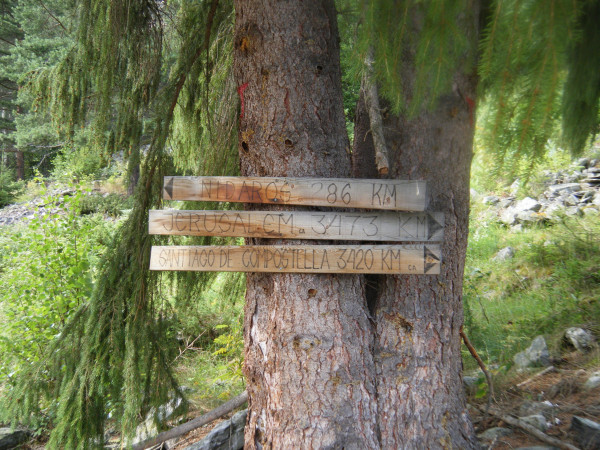
You can think of it as Northern Europe's camino (that pilgrim route in Spain). In the heyday of pilgrimages it is said that the chief pilgrim routes resembled a cross. They went south to Rome, east to Jerusalem, West to Santiago and, yes, north to Trondheim, to Nidaros Cathedral. The trails and paths led the devout from present day Scandinavia, Germany, Baltic States, Poland, Russia, etc. to the shrine of most holy St Olav, Eternal King of Norway.
The life of Olav Haraldsson, it is safe to say, really challenges the usual image we have of a saint. Born a true Viking in Ringerike about 995, these days we would label him in his early years as a child soldier, terrorist, war criminal and mercenary, as he raided Britain. Then he was invited to stay in Rouen with the Christian Duke of Normandy, converted, and he became inspired by the tales he heard of Charlemagne imposing Christian law under one crown. He also had prophetic dreams.
Returning to Norway, step by step he spread his rule over petty kings and chiefs, and enforced Christian law. He used force, although the teaching of the Church, even then, was against forcible conversion. In his defence the writer Sigrid Undset said he knew from within how evil some pagan practices were and would have considered them satanic, needing force to stamp them out. For example, the exposure of unwanted children. He united the country, but made enemies. They deposed him in 1028. He fled abroad (with his concubine! Perhaps he was a work in progress, like most of us). Returning two years later to reclaim his crown he was killed at Stiklestad, near Nidaros, in 1030. He appears to have expected to lose (from a dream), he was outnumbered but made a victory even less certain by only letting the hapless Christians in his small army fight for him. After the battle there was a solar eclipse.
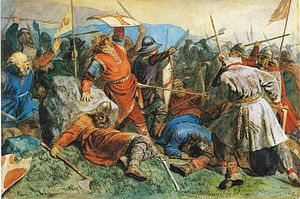
But it was by his death that a united Christian Norway was created. His enemies came to regret killing him, even the man who dealt the fatal spear thrust. The common people started to pray for his help, and found healing. Bishop Grimkel, originally from Britain, declared his sanctity. His body was found to be incorrupt. His cult spread across northern Europe and scores of churches honoured him. There is a 12th century Chapel in Shetland, in Unst, dedicated to him. Likewise a church in London. The great St Olav's in Tallinn, Estonia, was once thought to be the world's tallest building. And by the way, our church, St Margaret's in Lerwick, is on St Olaf Street, so there!
Pilgrims started to come to his tomb, eventually in their thousands. A vast network of routes branched out from what became a stately cathedral. For centuries they came. In the novel "Kristin Lavransdatter" the contrite heroine trudges there over the mountains to leave her dishonoured bridal wreath at his shrine. The kings of Norway were always crowned there.
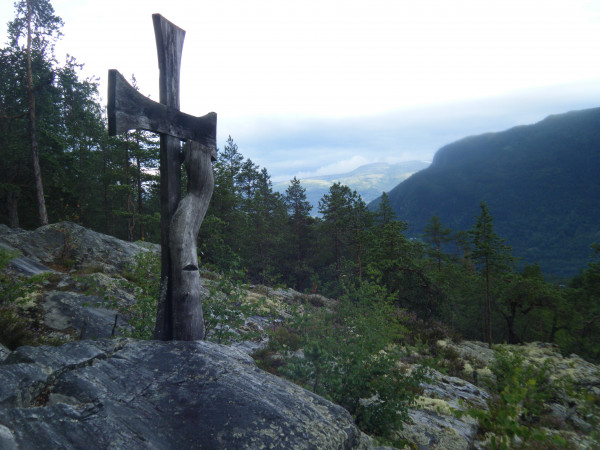
Then came the Reformation. As his attitudes hardened, Luther came to despise pilgrimages. The Protestant King Christian of Denmark, who ruled Norway by then, banned pilgrimages in 1603, under pain of death.
But truth will out. There is something in the human soul that has to be to express itself by pilgrimage. The Lutheran Church today recognises this. Why, there is now even a pilgrim trail in Germany that honours Martin Luther! And, since 1997, the Lutheran Church in Norway, along with generous government help, has encouraged pilgrims to come to his cathedral again. Olav's body was hidden at the Reformation, but his remains are probably still in the cathedral precinct, somewhere. The present high altar is where his shrine used to be.
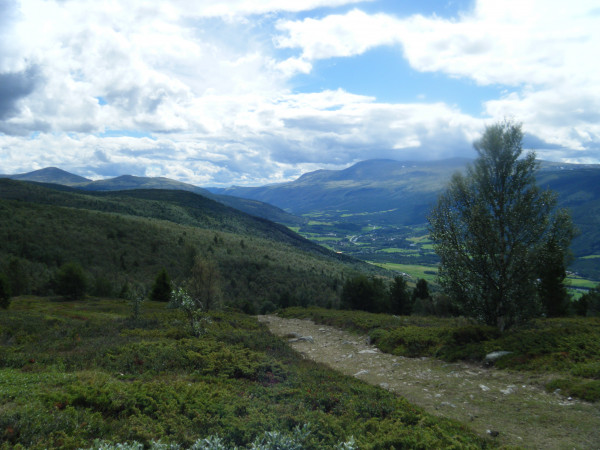
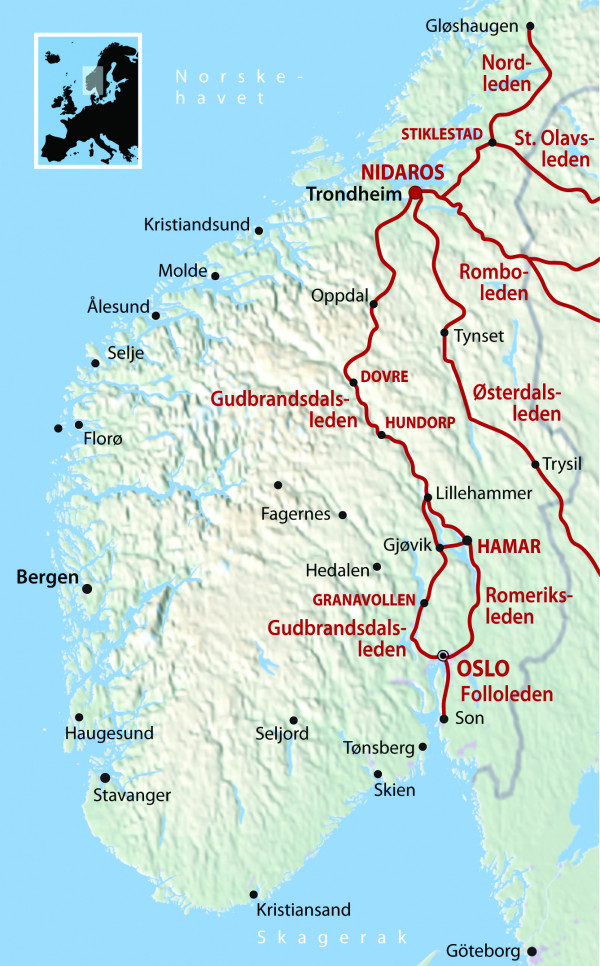
The main pilgrim path, well marked with distinctive posts and markers stretches over 600 km from Oslo. Geographically it follows the long ribbon like lakes north of Oslo, up the beautiful Gudbransdal valley, up and across the wild Dovrefjell plateau, then down to the gentler valleys and woods north of Oppdal. It is, and I say this emphatically, by no means straight. In this day and age how can it be, with all the properties, boundaries and roads it has to contend with. There is also a marked trail from Sweden and other possibilities, even by sea.
So how, in the Holy Year of 2016 was I going to honour the chain-mailed saint who brought Christianity to Shetland? It seemed logical to me to start at Lillihammer. After all, I would be coming straight across from Shetland. Going down to Oslo didn't seem right, plus, it would cost more, I would find it hard wild camping in the more built up area, it wasn't so scenic, and, I had discovered Sigrid Undset.
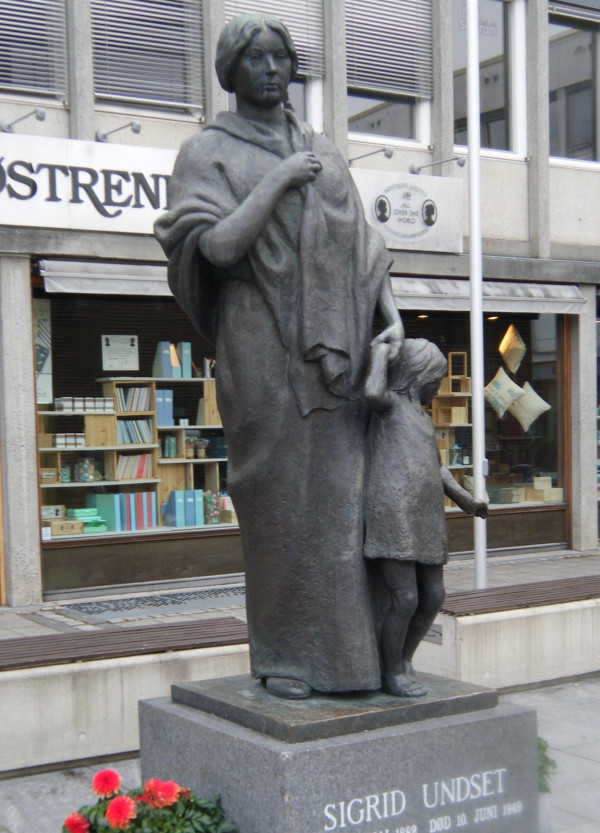
For years I had just known this name as that of an attractive young woman whose portrait appeared on the 500 Norwegian Kroner banknote (just enough for two days food). Then as I researched the pilgrimage, her name kept cropping up, and eventually I read about her astonishing life and achievements. Put briefly, she was the first female Nobel laureate in literature, expert on the sagas, Olav and the Middle Ages, a patriotic anti-Nazi and anti-Bolshevik activist, articulate Catholic convert and, in her opinion the most important, a good mother. Her home, now a museum, is in Lillehammer.
So I arrived there, armed spiritually with a pilgrim blessing for myself and accoutrements from Bishop Hugh, and feeling smug that I had got my pack weight, with food, down to 11.2 kg. The bright Italian curator, Irene, let me in early. There were Sigrid's awards from the King, family pictures, Nobel citation, her rosary and Bible under armoured glass, and much else. When others arrived we were taken on a tour of the house. Irene pointed out the bookshelf filled with books about St Catherine of Siena, which Sigrid had read to research her final book.
Then from that shrine to that up north just over 400 km were waiting to be hiked. If you are Norwegian or Swiss, or just well heeled, all you have to do is take a light day pack, your "skives" of bread, thermos and waterproofs and walk briskly from one establishment to the next. There are plenty of hotels, B&Bs, auberges, and hostels on the way. There is a compact Dutch guidebook which is very good at showing you where to stop, which is also in German and Norwegian. My English guidebook wasn't too bad, certainly better than no guidebook, but it seemed to attempt to Wainwright the route, explaining in exact detail which way to turn, etc, when the signposts on the route were usually quite clear about this. Most of the time I found it too stressful to follow. Then when the signs thinned out and I tried to find where I should be on the pages it was if I could hear her ticking me off for not paying attention to her.
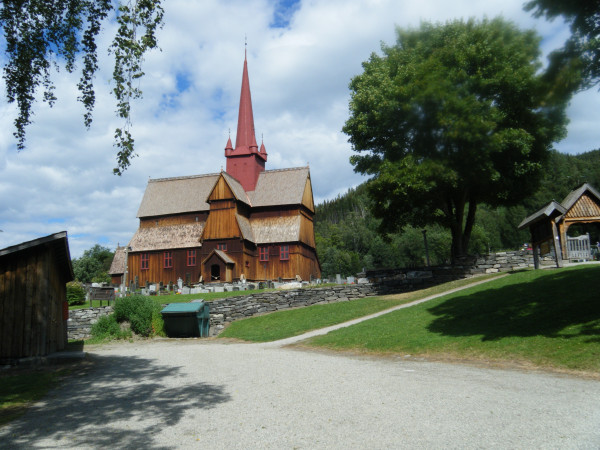
There were three other imaginary guides. I pictured these characters as the people who had cooperated to map out the Pilegrimsleden. One was a bookish rather earnest mediaeval re-enactor, dressed like a pilgrim complete with big staff and hat with scallop fixed to it. He wanted us, wherever possible, to follow the authentic pilgrim route that he had diligently rediscovered, even if it ran parallel to a quiet gravel road. Next there was the hearty very outdoorsy woman in shorts who loved to see views and pick bilberries. She had us going straight up from the valley floor to a wonderful viewpoint 600 m up, along a bit, then straight down again, because that is the only way you can do another 600 m climb a bit further on. Then there was the character I increasingly took a shine to, in his early thirties, dressed in sporty lycra like his pals who are all practicing skiing on rollskis, big wristwatch, curved mirror shades. He wanted to be on the tarmac facing the oncoming traffic, putting in the km/h. They each had their place. The route wouldn't work without them. But there was a point just south of Rennebu where I could have pushed the cheery woman off her viewpoint down to the empty road way down below!
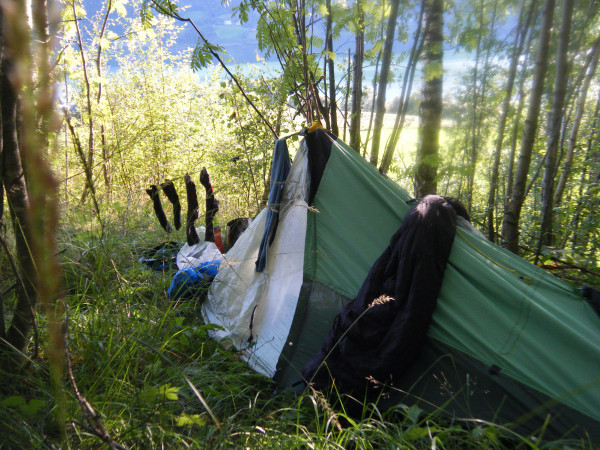
But it IS so beautiful, and full of variety, from the very beginning. A hot slog along tarmac would be followed by a deliciously cool tunnel of trees, and then you are walking along the edge of a waving field of barley. Every afternoon about four o'clock I would be searching my hopeless small scale map for a blue line. You have to have water to camp, but I always found something. Only once was it unfit to drink (but not to wash socks!). There was always a place I could legally pitch my poncho-tent. Following a sketchy map was fun, like pretending to be a downed pilot evading by means of a silk map of Europe. As for provisions, my guidebook helped, but I did find myself standing once in front of a huge supermarket, under numbers saying "23-7" trying to push the doors open on a Sunday. Luckily there was a petrol station. Norwegian petrol stations are brilliant. Always open. They stamped my pilgrim passport, provided feasts like hot baguettes and stocked my staple diet of spaghetti, cheese and "Bixit" chocolate biscuits. (Naturally, I always got comments from other hikers about British politics when they saw me with the latter!)
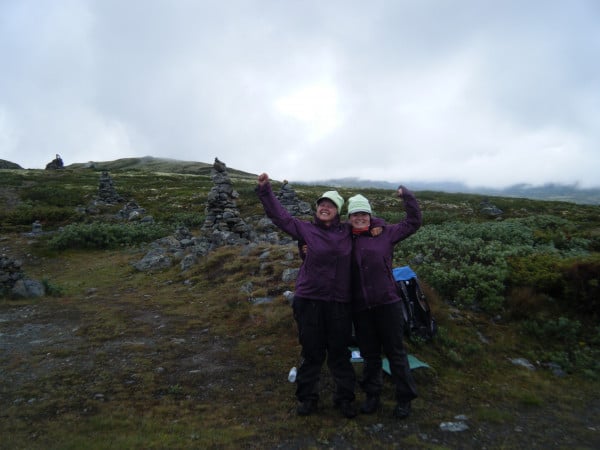
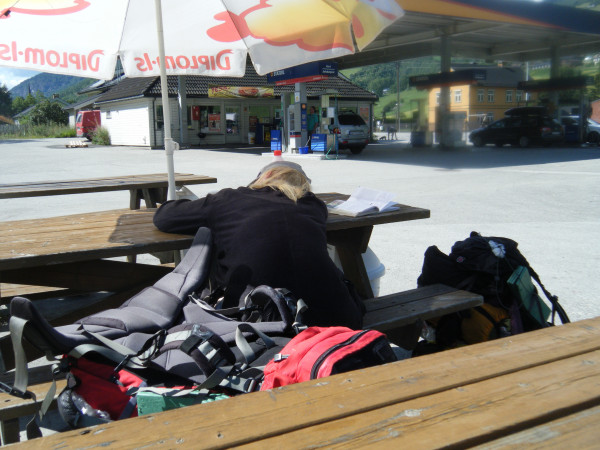
I started meeting fellow pilgrims after three days. There was a pattern; you would politely pass them, you would be having a break and they would pass you, then the next time you introduced yourselves. After a few days you were a community. I was very taken by one couple, ex-college pals Christina and Martina. I first saw Christina outside a petrol station, fast asleep on a seat. Seeing her backpack I thought, "That's too much for a girl to lug around". Two days later she was lifting up my pack, snorting "Eh! Far too heavy! You need to carry less!" "But it was 12 kg at the airport with three days food in it! OK I've got water, but..." "No!! This is 15, 16 kg!" "Give over..."
Yes, Pack weight snobbery is rife among long distance hikers.
Except for 'Johnny'. A tall German, his pack hit the roof beams of Olskastet hut as he jerked it onto his wide shoulders. Amongst other things strapped to his pack were an axe and three large onions. He didn't care, and went faster than anyone. Except 'the Spaniard'. I think 'the Spaniard' had been reading Ray Jardine, the American guru of ultralight hiking. He had a cuben fibre jacket, a small day pack, wore shorts in the rain and did 35 km a day in running shoes.
And then quite a few of us bumped into each other again in Trondheim. All a bit like a travelling "Brief Encounter".
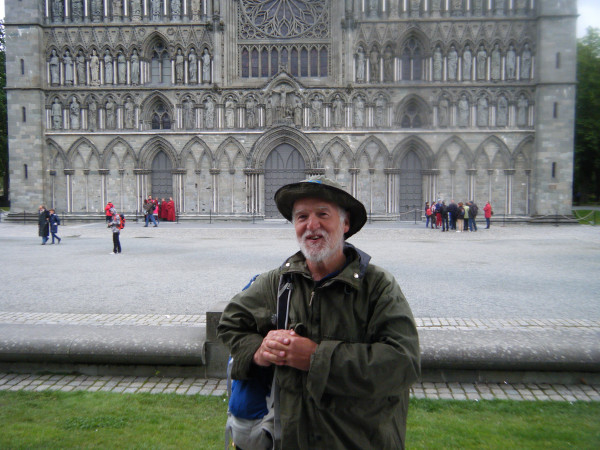
To be there at last in front of the elegant facade was quite moving. In pointless halting French I asked a chap clutching a "Norvege" guidebook to take my picture si play.
"Certainly. I press here, do I?"
In the picture I see how I should have blown my nose, and the paler statue of Olav among the other saints, smiling enigmatically.
"Ice Cold in Trondheim"? Well, I very much like the movie "Ice Cold in Alex" and in my research found out that a pilgrim who carries a special written request from a Bishop has to have that request carried out. I thought it would be nice to get an ice cold Carlsberg, or any-hugely-expensive-in-Norway beer, on arrival. Bishop Hugh was sympathetic enough to give me the necessary letter. Thinking quickly on their feet the welcomers at the Pilgrim Hostel apologised that the 'Pilgrim Bar' was closed for the season, but that I was welcome to as much coffee as I liked.
Which was actually pretty good!
Neil Work, 1 September 2026.
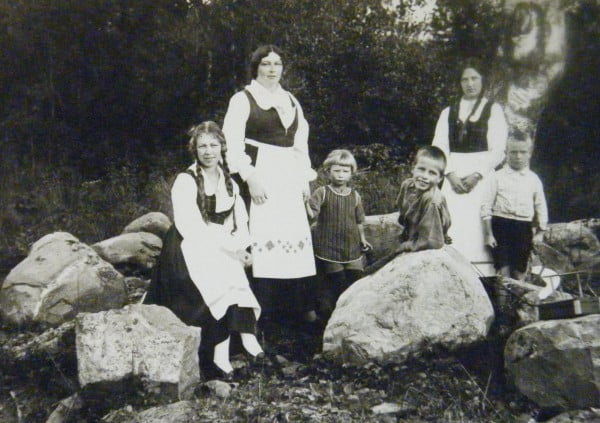
POSTSCRIPT. On 8th July 2026 the Bishop of Oslo started the process for Sigrid Undset to be declared a saint and her cause has been officially opened. She has been given the title Servant of God. Her novels have been recently republished in the USA in a new translation. The photo shows Sigrid Undsted with her family.
SOLI Sisters
15 Aug 2026
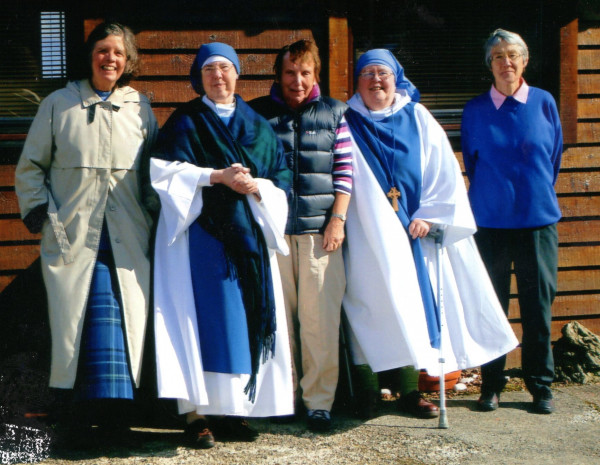
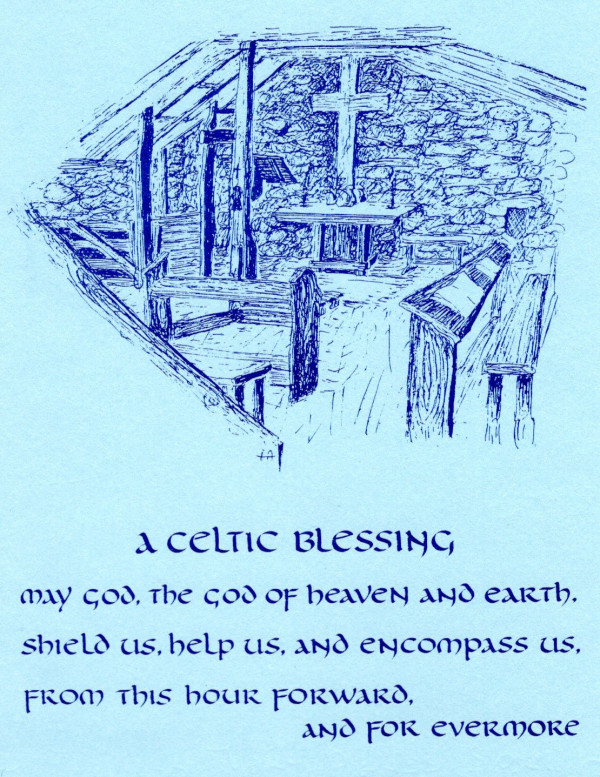
The SOLI Sisters - or to give them their full title, the "Society of Our Lady of the Isles" - were a community of Anglican sisters who made their home in the North Isles of Shetland. Sr Agnes had arrived in Fetlar in 1984 from Posbury convent in Devon and intended to live as a Franciscan solitary in an old croft at Aith Ness which she rented from a local family. The first chapel was a small room in the roof space, but when that was later needed for an expanding community, the byre end of the croft was converted to the "Byre Chapel". A drawing of it survives in this bookplate:
Sister Agnes told the story of the community in a series of four books. The first was "A Tide that Sings" (London 1988), which took the story of her vocation as an Anglican religious sister to the time of her arrival in Fetlar.
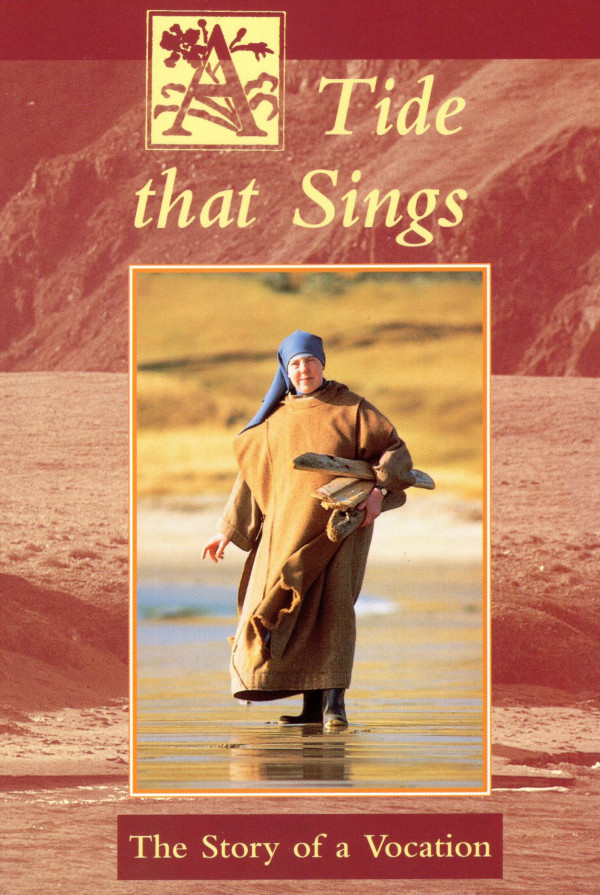
This book was a publishing success for SPCK and she was asked to write a sequel, telling the story of how the Fetlar community developed. This was published as "The Song of the Lark" in 1992. The next two books, "Island Song" (2001) and "For Love Alone" (2003) came after her ordination as a priest in the Scottish Episcopal Church when SOLI was recognised as a religious congregation. From that point onwards she was known as Mother Mary Agnes and those last two books were published under that name, always with the addition of "SOLI". They were universally known as the SOLI sisters.
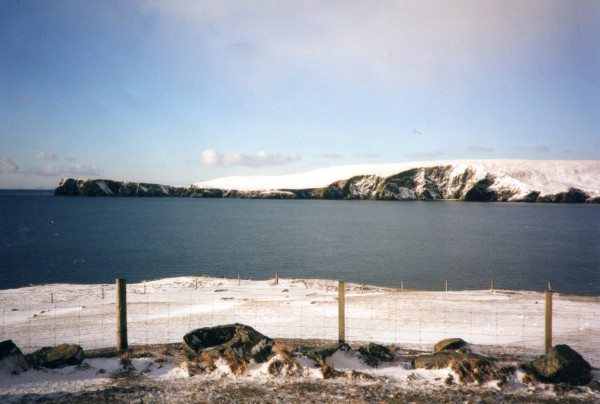
Most of my pictures for this blog come from pictures left in books I inherited from Sister Mary Aidan. This is an undated winter view of Fetlar from the Ness. Shetland winters can be harsh and one of the early books described a gale so strong it wrecked the caravan they used for guests.
This postcard shows a more benign view of Fetlar in early summer. It is known as the Garden Isle, mainly because of the fields of wild flowers. It was once a flourishing agricultural area but the community which numbered only about one hundred in the 1990s has now shrunk further to about sixty. The sisters received some substantial building grants from the Shetland Islands Council in the hope that a religious community would help to arrest the population decline.
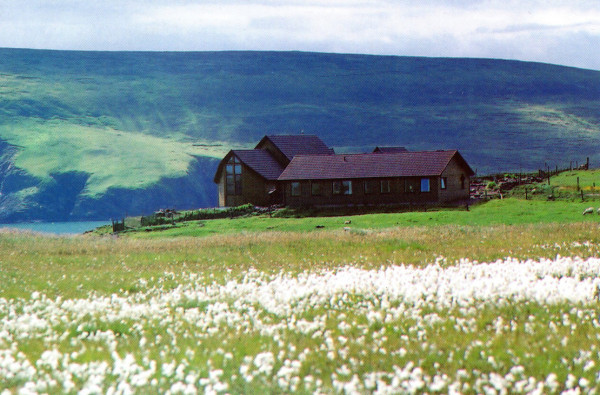
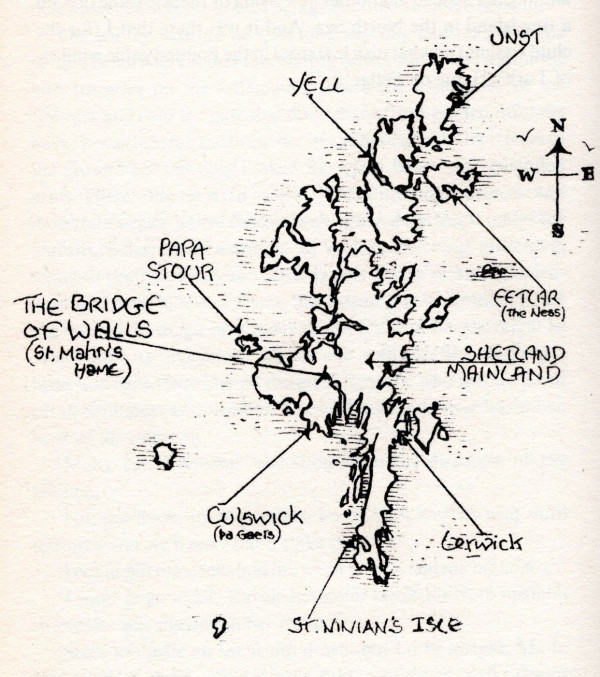
Mother Mary Agnes began with a basically Franciscan outlook, blended with a love for Celtic spirituality. Other influences came from the Catholic religious orders, especially Cistercian and Carthusian, but one conception which was distinctively her own was the visualisation of her growing congregation as a wheel. At the hub, a community of sisters living a semi-eremitic life of prayer on Fetlar, then spokes out to a rim which she called the Caim, a group of lay members living in their own homes who supported the community by their prayers and financial contributions. Between these two were Associate members who lived in Shetland and held civilian jobs. They would return to Fetlar at the weekends and the new convent builtings at Aith Ness had a number of wooden buildings (see the first photo) to accommodate them. The community also rented properties elsewhere, notably "Da Gaets" at Culswick and "St Mahri's Hame" at Bridge of Walls, both on the West side of Shetland. A map became a regular feature of the books.
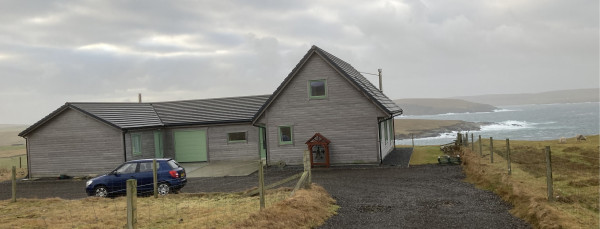
By the time I got to know the community, they had relocated to the neighbouring island of Unst. Mother Mary Agnes built a new convent at Westing, with dramatic views over the sea and towards the old Norse chapel at Lund. Sister Mary Aidan, the only other SOLI sister in vows, was by then living in sheltered accommodation in Uyeasound. I took the following two pictures in summer 2023, a few months before Mother Mary Agnes left Shetland to return to the English Midlands. She had guided the SOLI community for nearly forty years.
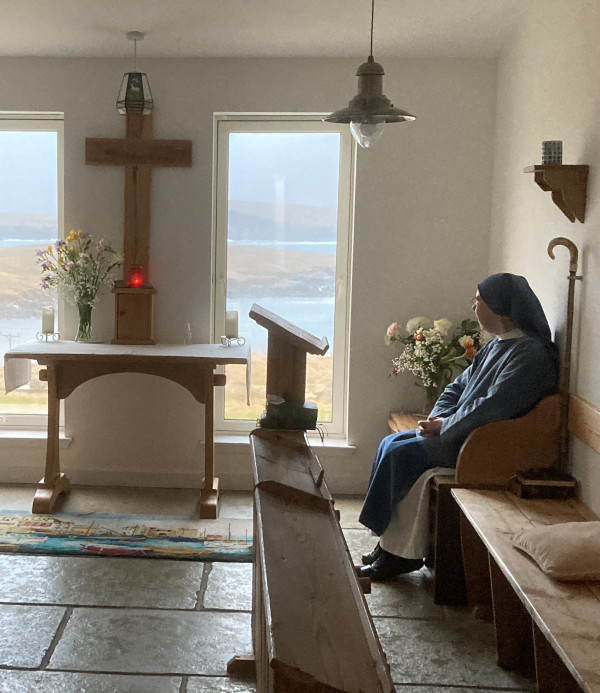
The SOLI community in Shetland came to an end on 17th January 2026 with the death of Sister Mary Aidan in Unst. She had a very ecumenical funeral. An Orthodox nun assisted in the preparation of her body for burial. At her request, there was a Requiem Mass in the Catholic Church in Lerwick, and her body lay overnight before the altar before being driven to Unst for a burial service led by the Anglican bishop of Aberdeen and Orkney in the Methodist Chapel in Haroldswick. The retired Methodist Minister played the organ. We were saying goodbye not just to Sister Mary Aidan but the community she represented.
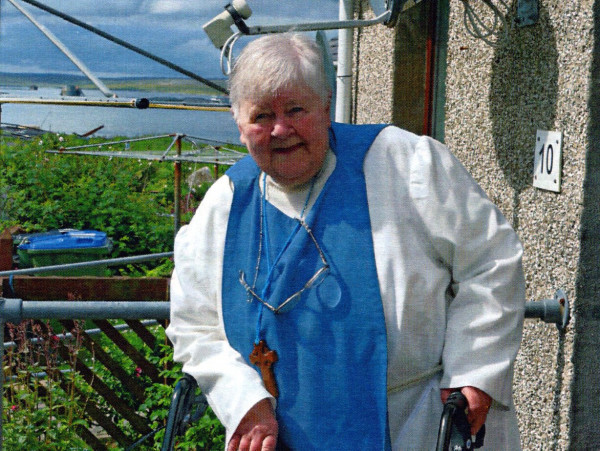
Sister Mary Aidan, SOLI, (12 March 1942 - 17 January 2026). She is buried in Lund Churchyard, Unst, next to Jean MacCubrey Zadig (1934-2018), SOLI Companion Oblate. Jean is on the left of the group photo at the head of this blog. There are two SOLI Oblate Companions buried in the Fetlar kirkyard at Tresta: Rosemary Cundy Thompson (11th November 1921 - 22nd January 1999) and Sybil Gertrude Hansford (3rd June 1923 - 5th December 2007).
The various buildings associated with SOLI are all now in private hands and the chapels closed. The community's first chapel in Fetlar at The Ness, the "Byre Chapel", remained in use until December 2014. The Chapel of Christ the Encompasser in the new buildings on Fetlar (shown in the postcard above) was closed in the summer of 2015 when the community moved to Unst. The final chapel of Jesus the Good Shepherd at Westing, Unst, was consecrated by Bishop Robert Gillies on 18th February 2019 and closed when Mother Mary Agnes, SOLI, retired to England in October 2023.

Ambrose Flavell, 15th August 2026.
Orthodox Pilgrimage to St Ninian's Isle
10 Aug 2026
‘Pilgrimage is a bridge that can take us from where we presently are to somewhere else with a higher meaning and content.’
Mount Athos-a journey of self-discovery. Luiz Rocha
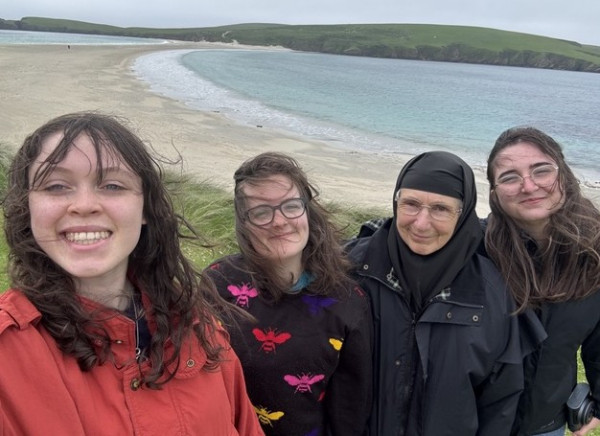
Shetland has not had the summer heatwave of most of Europe and on June 19th the forecast was cold and wet for the Orthodox Community of Saint Ninian pilgrimage to Saint Ninian’s Isle, so most people cancelled. However three young, intrepid visitors, Ruby, Nema and Lucy joined Mother Mary just as the clouds parted allowing glimpses of the sun. After walking across the sandy tombolo, Mother Mary chanted a hymn to Saint Ninian in the 12th Century chapel on the Isle.
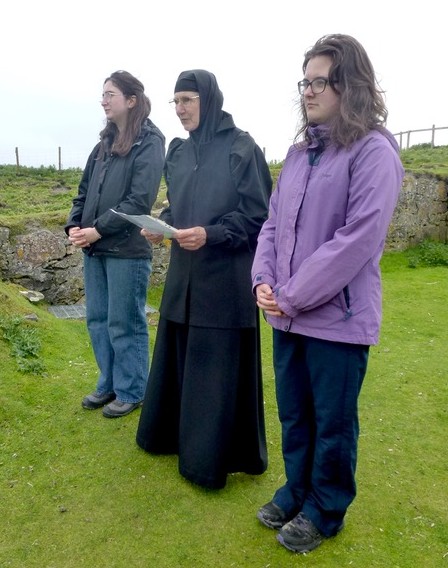
There is no record of Saint Ninian visiting Shetland, but the saint is venerated in this sacred place which was probably one of the first sites to witness Christian worship in Shetland. Saint Ninian is known as ‘The Apostle to the Picts’ and in 1958, a schoolboy discovered Pictish treasure dating from around 800 CE but the first signs of human occupation on the isle date back to the Iron Age around 800 BCE.
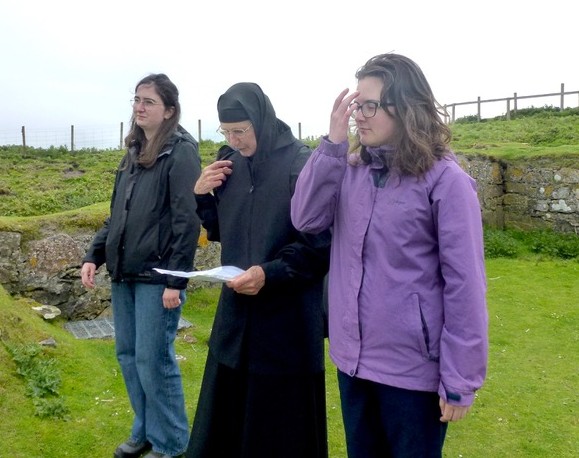
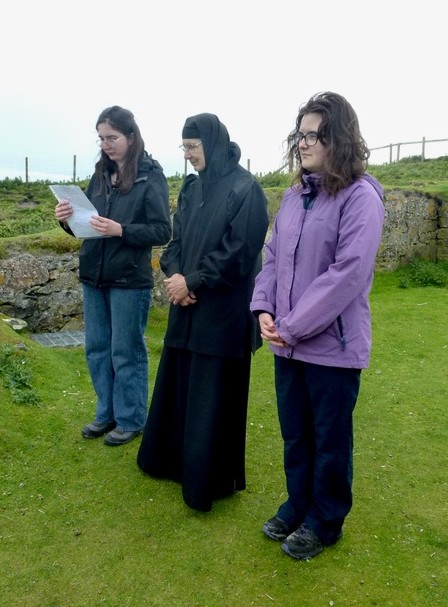
After spending time in silent prayer, soaking up the spiritual atmosphere of a ‘thin space’ between heaven and earth, the pilgrims made a brisk walk back to the car park to warm up with a very down to earth cup of tea and slice of cake.
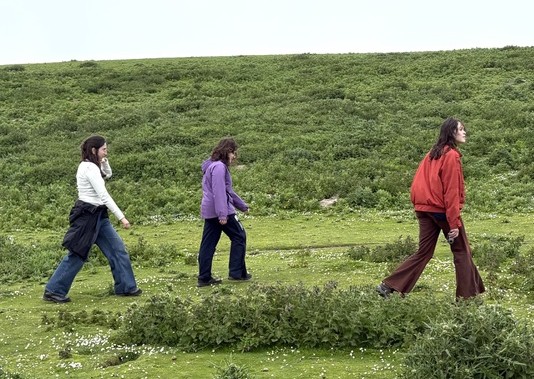
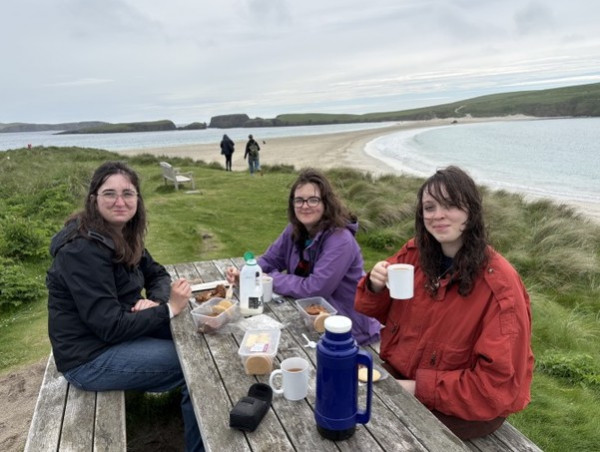
An unexpected postscript is that a few weeks later when Bishop Raphael of Ilion, Father Antonios and two Greek nuns from Crete were visiting Shetland in order to celebrate Holy Baptism and the Divine Liturgy, there was a second, unplanned pilgrimage to Saint Ninian’s Isle which ended with the nuns singing the hymn to Saint Ninian in Greek.
Holy Father Ninian, please pray to God for us!
Link to the nuns singing Saint Ninian hymn in Greek (YouTube Video).
Link to an illustrated article about Bishop Raphael's visit (Webpage).
Mother Mary, St Sunniva Hermitage, 10th August 2026.
Walking Pilgrims visit Shetland
22 May 2026
In one week Shetland was blessed by the visit of two walking pilgrims, both originally from the USA and both called to connect with Shetland's 6th century Celtic spirituality, as well as make Christian connections today.
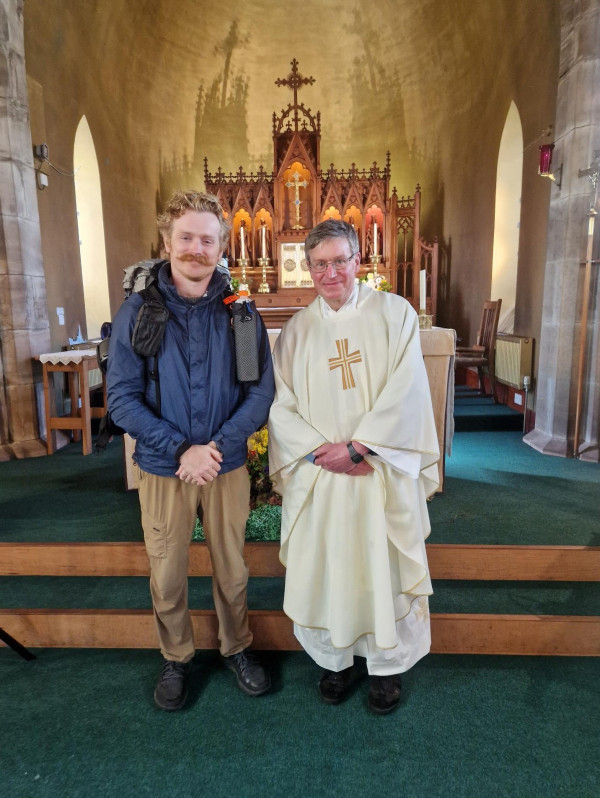
Kevin Caffrey, 35, is walking from Muckle Flugga to Rome, hoping to complete this journey in five months. He contacted Fr Ambrose to ask for a Pilgrim's blessing at the start of his journey.
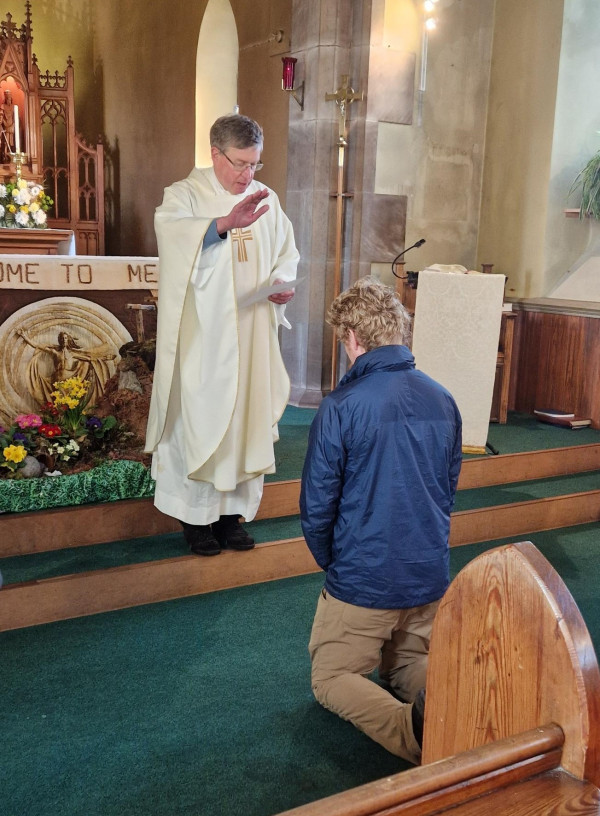
I was at Mass that day and was able to meet him, and so I recognised him on the road to Sumburgh a few days later and was able to stop and encourage him.
He is mostly camping, and experiencing some poor Shetland weather with lots of wind and rain, so he was happy to have the offer of a bed for some nights from Ambrose and at Maranatha with us.
That same week, we had news at St Margaret's that another walking pilgrim, Ann Sieben, founder of the Society of Servant Pilgrims, was in the Aberdeen diocese, having begun in York walking the sites of the early Celtic saints, and folk were encouraged to offer her a place of rest if they met her.
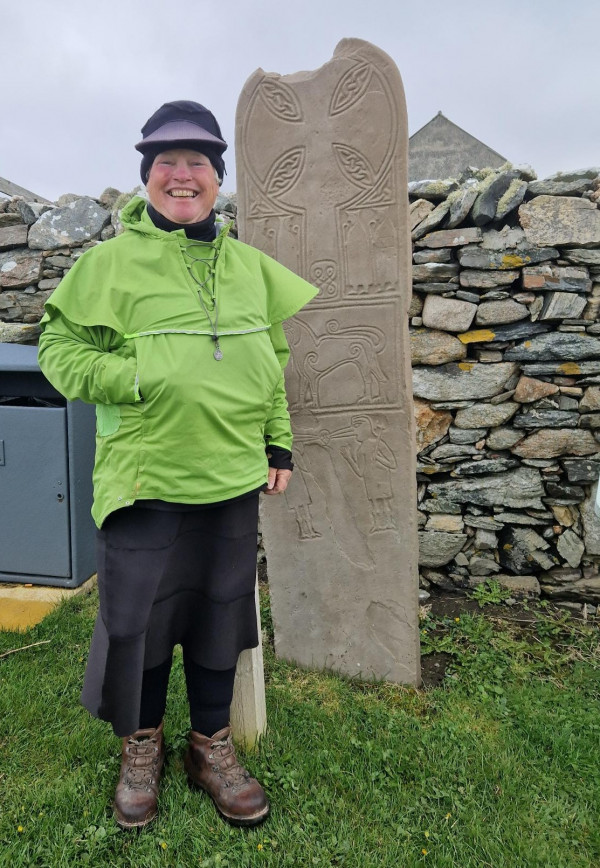
Ann was here in Shetland 15 years ago, and we knew her extraordinary story was worth hearing and sharing, so I got in touch with her and asked if she would consider coming to Shetland as part of her pilgrimage. She was delighted to hear from Shetland again, and altered her plans to include a visit here, coming via Thurso then Kirkwall.
Ann has been a mendicant pilgrim for many years, indeed, she has calculated she has walked the earth's circumference two and a half times! She has no home, ("I have good friends") and her only possessions are in a small rucksack that accompanies her on her journey. She carries her pilgrim credentials wherever she goes and they are signed by her hosts every night. When she arrives at a town or village she knocks at a church door and asks for a place to rest ... she is usually, though not always, given room in a church hall, a church, or sometimes a house.
It was a huge privilege to have her stay with us, and we were able to take her to St Ninians, Papa Stour, and Papil on Burra. She spoke after Mass to a group of people at St Margaret's and later to folk who joined us for lunch at the High School.
Ann has innumerable stories to tell, she is full of enthusiasm for the Pilgrim way of life and longs to share it. With help from her Archbishop in Denver, the Society of Servant Pilgrims was born, to enable others to share the privilege of walking with God. She says true pilgrimage builds trust between strangers, and this is the foundation of peace. She says you need good legs, an enduring spirit and unstoppable faith!
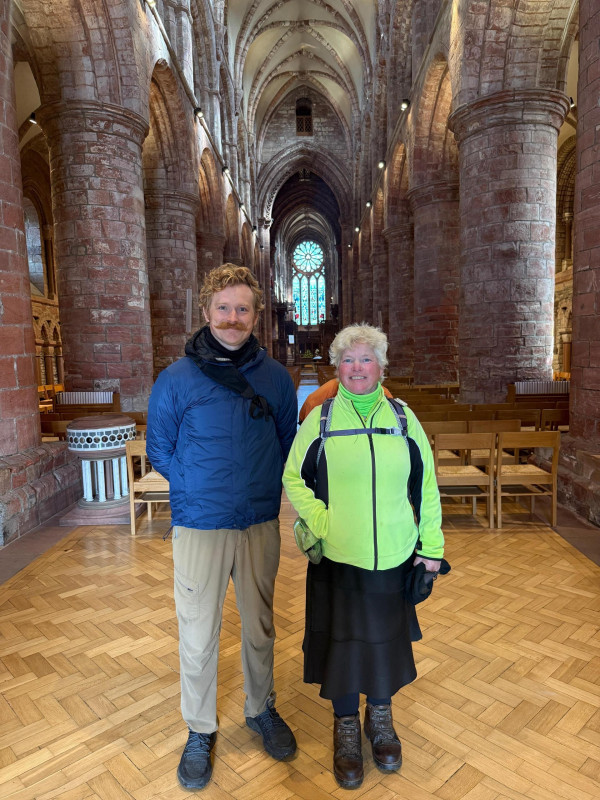
The photo above of Ann with Kevin was taken in St Magnus' Cathedral in Kirkwall on St Magnus' feast day. Kevin had been very keen to meet up with Ann as he had "never met anyone else who does this stuff". We put him in touch with her so that they were able to be in Kirkwall on the same day ... he heading south from Shetland, Ann heading north. Wonderful Godincidence!
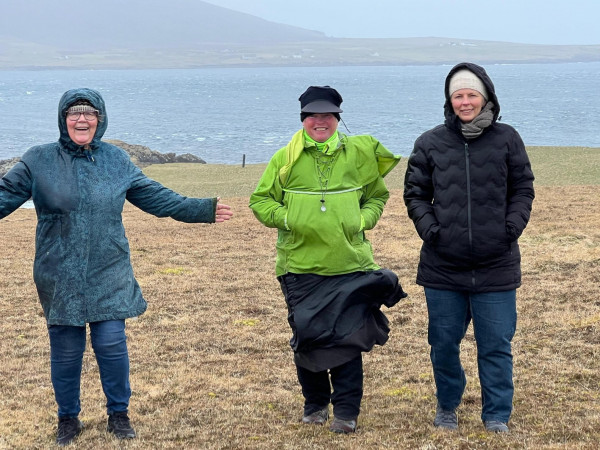
I found Ann inspiring and energising, and was able to talk with her about some of our hopes and ideas for pilgrimage in Shetland.
Hilde Bardell, May 2026.
Update, 15th August 2026
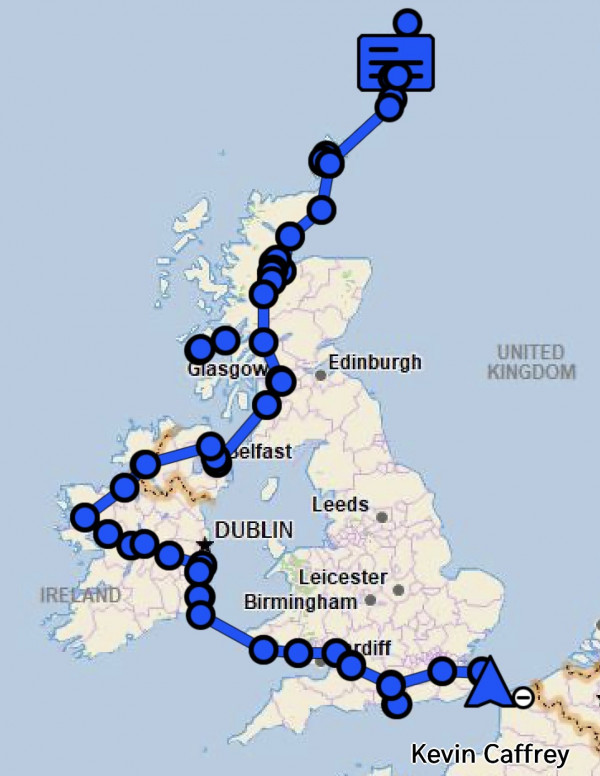
After starting his journey from the northmost point of Shetland, Kevin Caffrey walked through Orkney, Western Scotland, Ireland, Wales and England. This must be the longest possible extension of the new Via Francigena Britannica. Yesterday he reached Canterbury, the official start point of the Via Francigena to Rome, and is now in Dover, waiting to cross to France.
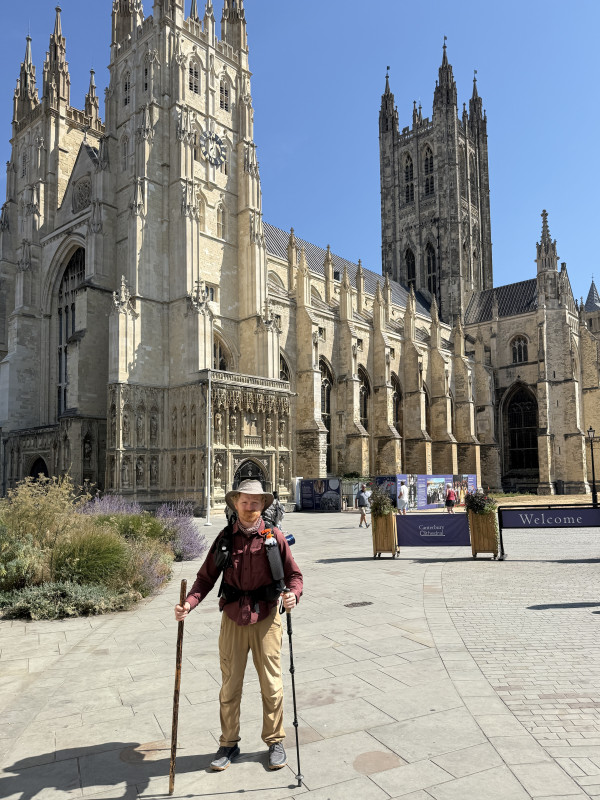
Buon cammino, fratello!
Ambrose Flavell, 15th August 2026.
Welcome

Welcome to shetlandpilgrimage.scot.

Links: Shetland Churches
- Catholic Church, Shetland.
- Episcopal Churches in Shetland.
- Methodist Churches in Shetland.
- Orthodox Community of St Ninian, Shetland.
- Shetland Church of Scotland.
Shetland
- Shetland Retreat, Fetlar.
- Papa Stour Community History Group.
- Hamars & Harps, Haroldswick, Unst.
- Wild Skies, Shetland.
- Fair Isle Bird Observatory.